
Other Little Ships
A classic sermon by the "Canadian Spurgeon", Thomas Todhunter Shields
ENGLISH
Thomas Toddhunter Shields
7/1/202622 min read
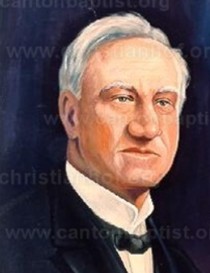
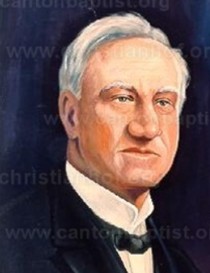
"OTHER LITTLE SHIPS" FREIGHTED WITH COMFORT - Thomas Todhunter Shields
Having come across a number of mentions of "Other Little Ships" as an influential sermon by the late T.T. Shields, sometimes known as the "Canadian Spurgeon", my interest was piqued. Most references to Shields seemed to indicate this was his most memorable sermon. However, I was unable to locate any online versions of this sermon. As a result, I purchased a secondhand copy of some of Shield's sermons (The Hunter Rose Co Ltd, Toronto, 1935) and transcribed it for online reading. T.T. Shields is often portrayed as a controversial and combative man, but this particular sermon is "freighted with comfort", providing much needed reminders for the storms in our lives, and helping us to look to Christ, more than a little ship, but the mighty "Ark of our Salvation".
“And there were also with him other little ships.” Mark 4:36.
OUR evening text will be found in the fourth chapter of the gospel by Mark. I shall read from the thirty-fifth verse: “The same day, when the even was come, he saith unto them, Let us pass over unto the other side. And when they had sent away the multitude, they took him even as he was in the ship. And there were also with him other little ships. And there arose a great storm of wind, and the waves beat into the ship, so that it was now full. And he was in the hinder part of the ship, asleep on a pillow: and they awake him, and say unto him, Master, carest thou not that we perish? And he arose, and rebuked the wind, and said unto the sea, Peace, be still. And the wind ceased, and there was a great calm. And he said unto them, Why are ye so fearful? how is it that ye have no faith? And they feared exceedingly, and said one to another, What manner of man is this, that even the wind and the sea obey him?”
“And there were also with him other little ships.” I suppose it is quite natural, when reading this story of the miraculous stilling of the tempest, that our attention should chiefly be given to the ship in which Jesus Christ sailed. But the record I have read this evening tells us that, although the disciples who sailed in the ship with Jesus enjoyed the special advantage of His presence, and the privilege of calling upon Him in their time of danger, yet on that stormy night, sailing that troubled sea, there were “also with him other little ships”.
I. First of all, will you turn over in your mind the very simple observation, that THERE ARE ALWAYS MANY SHIPS AT SEA, AND THAT THE STORM THAT BREAKS UPON ONE SHIP, BREAKS UPON THE OTHERS.
That is true of those who are exposed to the winds of adversity. However troubled you may be by circumstances which you imagine are peculiar to you, out on the storm-swept sea there are also “other little ships”. The storm of adversity does not break upon you alone. You are probably, some of you, having rather a hard time these days, for these are not days of general prosperity. There are some here this evening, very probably, who are finding it difficult to make ends meet, who are subject to many limitations because of the straitness of their temporal circumstances. And there are some, perhaps, who are disposed to imagine that they are rather hardly treated, that their situation is peculiarly difficult, that somehow or another something has gone awry with the government of things. I would remind you, my friends, that you are not alone in your adversity. There are “other little ships”, and you must not groan and grumble too much. We are having not very easy times in Canada just now, but I read in last evening’s paper that there are perhaps a hundred thousand unemployed in Detroit—in the land of plenty and of wealth to the south of us. When I read it I said to myself, The storm is sweeping that sea as well as ours. We have no monopoly of present-day difficulties on this troubled surface; there are still “other little ships”.
I know some will say that that furnishes but small comfort; notwithstanding I think there is great advantage in our recognizing that no strange thing has happened unto us.
It were foolish for any man to imagine that all the fates are against him. I know of one poor fellow who used to attend this church, who got it into his head that everybody was his enemy. He came here one day with samples of bread, and cake, and I know not what—food he had brought from different restaurants. He wanted us to have it analyzed, because he was quite sure that wherever he went somebody was putting poison in his food. He was a good fellow at heart, but his head was wrong, and he had to be taken care of.
There are many people who are not in asylums who open their hearts to that fallacy; they think they are having a peculiarly difficult time, hence they become cynical and hard and bitter. But trouble is the common lot of life; when the storm breaks, the whole sea is troubled, and you have no monopoly of the tempest—there are with you “other little ships”.
That is true too of physical affliction. I do not know how often in the course of my ministry as a pastor people have said to me, “Why should I be especially afflicted? What have I done to deserve such chastisement? Why should all this trouble come upon me?” Your difficulty is that you are so sea-sick you cannot get on deck to see the other little ships. When affliction comes to us we are disposed to think that we are the only one who has such sore trouble; and yet if we go up on deck a while and look out upon the rolling billows, we shall discover that there are other ships at sea. You are not the only one who has sickness in your home. You are not the only one who bears burdens. Many ships are ploughing their way through the storm this drab and dreary day.
I recall the case of a woman who was troubled with rheumatism, which is one of the worst of isms. She used to spend most of her time in a wheel-chair. In this particular case the rheumatism seemed to have found its way into her spirit as well as into her joints, for she was about as rheumatic in temper as in body. She was all pains and groans; and when I went to see her—she always called her husband by his surname; to be as impersonal as possible I will call him Smith—she used to say, “Smith does not understand me.” She had two of the most devoted daughters I have ever known, who waited on their mother hand and foot; but she insisted that they had no sympathy either, nobody cared; her timbers were the only ones that creaked in the storm, her ship was the only one exposed to the violence of the waves. I tried to comfort her by telling her of another little ship, of another woman who was troubled just as she was; but she was like Dickens’ Mrs. Gummidge who used to suffer from the east wind, who when informed that the east wind touched other people as well, insisted that nobody felt it as she did; that the east wind went through her shawl as it got through nobody else's shawl. Her constant complaint was, "I'm a lone lorn creetur' myself, and everythink that reminds me of creeturs that ain't lone and lorn, goes contrairy with me." To "Dan'l" she insisted, "If I felt less, I could do more. You don't feel like me, Dan'l; thinks don't go contrairy with you, nor you with them."
And there are many like her, who are never so happy as when they are miserable. They take a melancholy delight in magnifying all their ills, and in persuading themselves that all the trouble in the world is theirs. Nothing could be farther from the truth, my friends. We sympathize with those who are in trouble—as we ought, for we cannot escape it ourselves; but try to remember that when the storm breaks and the waves are rolling mountain high, yours is not the only ship at sea. There are also with you "other little ships," equally exposed to the violence of the waves.
I heard from one dear soul last week who said, "I heard your message last Sunday. I have been a year and a half on my back in a sanitarium, and I was so happy to be able to join in your service." I cannot help thinking of scores of others to my certain knowledge who are similarly circumstanced. We send you, dear friends, through the air, our loving sympathy, and pray that God may lighten your affliction. "O thou afflicted, tossed with tempest, and not comforted", hear this word from the Lord: "The mountains shall depart, and the hills be removed, but my kindness shall not depart from thee, neither shall the covenant of my peace be removed, saith the Lord that hath mercy on thee.” It may comfort you somewhat to know that there are others battling their way through the storm, plowing the waves; and yet receiving grace, like Paul on the sea whipped into fury by the wind called Euroclydon, to call upon their fellow-voyagers to “be of good cheer”.
Last Sunday night before I left the church I found a telephone number awaiting me. I called, and a voice that was full of pain, and yet of cheerful gratitude, said, “Is that you, Doctor?” I said, “Yes”—I will call him by name. Perhaps he is listening in; I believe he is,—I said, “Is that you, Brother Wright?” He replied, “Yes; and I just wanted to tell you I had a good time with you to-night.” He is a soldier who was terribly injured in the Great War. He used to come here for a while, wearing a steel cast of some sort, but it is impossible for him to get out to the house of God now. When I asked him how he was he said, “I am pretty well. I cannot get out now, but I have much to be thankful for. I have more to be thankful for than some have.” He had managed to get to the deck of his ship, and looking out through the mist of the storm he had seen “other little ships”, and was comforted by their perhaps unconscious comradeship.
And that is true, too, of those who are exposed to peculiar sorrows. One says, “Mere stress of circumstances, and even bodily afflictions, are as featherweights compared with sorrow of heart; and it is from this last I suffer.” “The heart knoweth his own bitterness; and a stranger doth not intermeddle with his joy.” Yet we are tempted to think that we have a heavier burden of sorrow than anybody else; that we are going to be altogether overwhelmed. We thought that grave-digging was a new business the first time our spade was made to turn the sod, and we could hardly see through our tears that the path to the cemetery was worn by many feet. Others had been there before us, and as we came away we met others coming to the same place to bury their hearts. Notwithstanding, sometimes we felt that we were not travelling a road—it was a wild and furious storm-swept sea we were riding! Yes, but battling with the boisterous billows of the sea of sorrow there are also “other little ships.” This is a troubled world. Long ago a keen observer said, “Man is born unto trouble, as the sparks fly upward.” It is as natural for us to come into trouble as it is for the sparks to fly upward. You say it is poor comfort to be reminded that other people are passing through the same experience. You remember Tennyson?—
“One writes, that ‘Other friends remain,’
That ‘Loss is common to the race’—
And common is the commonplace,
And vacant chaff well meant for grain.”
That does not help us? Ah, but it does, sometimes!
A mother was standing dumb with grief beside a little coffin in which her only child lay cold in death. Her friends came in and they brought flowers and piled them around the casket in a well-meant effort to disguise death. But it was still death! I remember myself standing, in a similar case, beside the form of a little boy. His mother stood with me and I expect - she is listening in as I speak this evening, and as she laid her hand upon his cold little hand, she said, “Pastor, that is death.” I had nothing to say. Many friends came in, and they brought their flowers. Others came and told her she should not weep; that after all God had taken her darling child home, and that she must be resigned. She listened to it all, but made no response, and was uncomforted. Then a little woman came in and stood with her for a long time in silence. Presently she put her arms gently and lovingly around the stricken mother—she was an intimate friend—and she said, “Mary, in a drawer at home I have two pairs of little shoes, and the little feet that used to wear them are walking the golden streets to-day.” That was all! But the stricken mother seemed to shade her eyes with her hand as she looked out over the raging waters, until she saw that there were other little ships at sea. There was a bond of sympathy between her and another suffering soul, and she was comforted.
It may be there are some here this evening who say, “I could endure even that; I could bear physical pain; I could live on dry bread; I should be content to live in one room; but it is the moral aspect of things that troubles me. It is so hard in my business to steer a straight course; it is so difficult to live as a Christian should live; the temptations of life are multiplying, and the storms are so severe.” I talked with a theological professor one day some years ago regarding his attitude, and the attitude of Christian churches in general, toward the Bible; and he said, “Well, what are you going to do? We are facing a world condition.” His policy was simply to drift, drift, drift. The winds are blowing, and the seas are rolling almost as high as mountains—what can one do but drift with the storm? Ah, blessed be God; if our eyes are opened, though we may not see them at once, they may disappear in the trough of the sea for a moment, but if you look long enough you will see some other little ship bravely riding out the storm, steering a straight course, because commanded by the Captain Who is Sovereign of the sea.
We perhaps have thought that the storm of anti-supernaturalism which has been sweeping over Christendom has swept all orthodox ships from the sea except ours! We are in danger of supposing ours is the only ship at sea using the divine chart. We admit we have observed no “traffic jam”; but though they may be hidden in the trough of the sea, or obscured by the fog, there are other little ships at sea. “I have been very jealous for the Lord God of hosts: because the children of Israel have forsaken thy covenant, thrown down thine altars, and slain thy prophets with the sword; and I, even I only, am left. I am the only ship at sea.” “O no, Elijah,” said the Lord, “you are wrong. Yet I have left me seven thousand in Israel, all the knees which have not bowed unto Baal, and every mouth which hath not kissed him. I have seven thousand other little ships, and they are all steering a straight course. Cheer up, Elijah! You are not alone.”
It is a dark day, my brother. The storm is on; and it is true that men are “lovers of pleasures more than lovers of God,” and that “they will not endure sound doctrine,” but turn away their ears unto fables; and yet, I verily believe that there never was a day since Peter stood up with the eleven in which the Lord had more faithful souls than He has to-day. There are still other little ships.
May I relate an experience I had a few years ago, before the days of motor cars. But please remember that is not so very long ago, for I am not speaking as an octogenarian. It was in the days when bicycling was fashionable, and I was in the fashion—I had a wheel. I had been away at a meeting which continued until late. I was the last speaker, and it was later still when I got through, as you would expect! I had to be home the next morning at eight o’clock, and there was no train; in fact, it was a country place, and there was no way of getting home but by going on my bicycle. The road was strange, and I was directed to take a road that I had never taken before. I started out from the church in the country about midnight, and I wheeled along for a few miles until I came upon a sandy road, with a deep ditch on either side. I had to dismount, and I trudged along and pushed my wheel through the darkness. After tramping for several miles further I came into the midst of a thick bush, where it was as black as Egypt. The sky was cloudy, there was not a star anywhere to be seen. It was hard enough walking without pushing a bicycle, and I could not get off the sand without getting into the ditch.
There were a few fireflies here and there—it was in the summer time—but I remember that I felt as though I were the only one in all the world that was awake. To make matters worse big drops of rain began to fall, and presently I heard thunder, and a summer thunder-shower came on. The only redeeming feature about it was that the lightning lightened my path a little occasionally. I got a little wet and lonelier still, and I said to myself, “Was there ever such a night as this? Was anybody ever in such a plight as I am to-night?” I did not know where I was, nor whither I was going, and there was no one to tell me. At last I came to a railway track, and a little way-station. I climbed up on the fence and tried to read the sign, to discover where I was; but there was not light enough. Then I put up my hand like a blind man to see if I could read it with my fingers, if the paint would give me any help; but all to no purpose; so I resumed my journey. Presently I heard the sound of wheels, and as the vehicle approached, I hailed the driver. But he evidently feared I was a highway man. He applied his whip and galloped away, and as the sound of the wheels died away in the distance, I was left alone again, the only one out in that storm.
After a few more miles I came at last into a village street, and I thought, “I shall surely find company here,” but it seemed lonelier than the road through the bush, because everybody was fast asleep. There were no electric lights, everything was in darkness; until, getting near to the end of the street, I saw just a glimmer of light. I shall never forget the feeling that came over me as I said, “There is actually somebody else awake in the world.” As I reached the place I saw the light came from a dim lamp, shining out through a screen door. As I stood on the street and looked through the screen door, I observed two women sitting beside the bed of a man, who was apparently very ill. I went to the door, and so as not to alarm them, gently knocked. They were startled, but one of them came to the door, and before I could tell her that I was lost, she said, “Will you come in, Mr. Shields?” And I said, “How do you know me?” She said, “My sister's husband is dying, and she sent for me two weeks ago. While on my way I saw you on the train, and I overheard somebody mention your name, and that is how I knew you.” I entered, and went up to the couch of the sufferer. This good lady yielded me her chair, and I sat down beside his wife. He was dying. I took his hand and talked to him about the Lord Jesus. I did not know whether he was a professing Christian, but he seemed to open his heart, or the Spirit of the Lord opened his heart, to the truth, and he was greatly comforted. Then we knelt in prayer, his wife, and her sister and I, and commended him to the One Who goes through the valley of the shadow with those who put their trust in Him. Presently he lapsed into a peaceful slumber. Then these good women said, “You had better not go on.” I could only reply, “I do not know where to go. Perhaps you can tell me where I am. I have not the remotest idea.” They told me the name of the village, and I said, “I will wait until daybreak, but I have to go a long way, and must be home early in the morning.” So I waited until the birds began to herald the morning. I could have said,
“I wait and watch: before mine eyes
Methinks the night grows thin and gray;
I wait and watch the eastern skies
To see the golden spears uprise
Beneath the oriflamme of day.”
—and then amid the beauty, and to the accompaniment of the awakening voices of the opening day, I mounted my wheel and quietly slipped away.
A year or so afterward when I had preached in a certain place, at the close of the service a woman in widow’s garb came and gripped my hand very heartily, as she said, “Do you remember me?” I said, “No, I do not.” “Do you not remember being lost,” she said, “one night some years ago, and finding your way to the side of a dying man at three o’clock in the morning?” I said, “Yes.” She said, “I shall never be able to tell you what a comfort your visit was to my husband. He has gone home, but he witnessed a good confession before he went.”
There is always a reason for your being out in the storm, my friend. There are “other little ships”, and it is your privilege to share the trouble of the night with them.
II. These little ships SAILED IN THE WAKE OF THE SHIP IN WHICH JESUS SAILED. He was not in their ship, but they put to sea because He put to sea. “And there were also with him other little ships.”
It would be interesting to know the story of their passengers, and their crews, and their cargoes. I wonder what they carried? I wonder whither they went, those little ships that were on the stormy sea that night, because He was there? One of them may have carried a doctor, another may have carried a teacher, another may have carried a philanthropist upon some errand of mercy bent. But whoever they were, whatever they proposed to do, they were there because He was there, although they were not actually in the ship with Him. When Jesus puts to sea He never sails alone.
There is an indirect influence of the gospel which is not to be under-estimated. Many beneficial influences are set in operation by the preaching of the gospel, for which the gospel gets no credit. There are always with Him “other little ships.” There are some people who deny to the Church of Christ credit for accomplishing anything in this troubled world. It is popular to boast of the various forms of social service in which clubs, and fraternal organizations, and other institutions engage, to the disparagement of the church. Ah, yes, but your hospitals are the ships with doctors; your educational institutions are the ships with teachers; and all your philanthropic endeavours are ships that carry well-intentioned men who put to sea only because the Lord Jesus first shows the way.
I heard Professor George Jackson deliver an address before the Toronto Ministerial Association. I am not sure of the exact wording of the title of his address, but I think it was “John Morley, The Priest of The Outer Court.” He extolled John Morley, the biographer of Gladstone; he described his blameless character, his wonderfully serviceable life, his amiable disposition, and held him up as a kind of superman; being careful to point out that in the production of this character religion had no part; for John Morley was an agnostic. I happened to be living in the same direction and walked up the street with Dr. Jackson, after the meeting, and I said, “Doctor, has it ever occurred to you that Morleyism never yet produced a John Morley, that you cannot find a John Morley where Christ is not preached, and His principles are unknown? All the influences which made him what he was had their origin in the very religion which he refused to acknowledge.”
“There were also with him other little ships”; and everything that is good in what we have been pleased to call our Christian civilization is there because Jesus sails the sea.
III. But let no one make any mistake: THERE ARE SPECIAL ADVANTAGES TO THOSE WHO SAIL IN THE SHIP WITH JESUS. I would rather sail in the ship with Him than be in any one of the other ships, wouldn’t you? What was the difference? In the first place, those who sailed in the ship with Jesus were conscious of His presence as the others were not. The others shared the miracle, the others reaped the benefit of His stilling the tempest, although perhaps they never knew, and never acknowledged, what they owed to Him. Multitudes of people sail a calmer sea, and live an easier life, because Jesus Christ shares the sea with them; but they are in one of the “other little ships,” and they do not know how much they owe Him. But they who were in the ship with Him knew that it was the presence of Jesus in the storm which brought deliverance to them, and to the other little ships.
It may be there is someone here this evening who is not a Christian, and who says, “I have seen Christian people just as much troubled as I.” Yes, they sail the same sea with you, my friend. “But they are just as fearful in the storm as I am.” Yes, they seem to be so. They may even talk of perishing sometimes, as David did when he got into a fit of the doldrums. He said, “I shall now perish one day by the hand of Saul. He will be too much for me some day. I fear I shall be overwhelmed at last.” Yet, he really knew better; and so did these disciples. Although they were filled with fear, there was a subconscious realization through it all that there was Someone in the ship with them Who had command of the winds and the waves. You will remember how they awakened Him at last, and said, “Carest thou not that we perish?” The Lord does not command the storm at the first gust of wind. He lets the wind blow awhile for us; and some of us must suffer real seasickness before we get out of our difficulties, and perhaps that will do us good. They say seasickness is very beneficial! But He is there; and in due time He will awake and rebuke the wind and the waves, and there will be a great calm; for the ship in which the Lord Jesus sails always outrides the storm.
It is a high privilege to sail in the ship with Him. I exhort you to be sure to get in the right ship. May our lives be such that we may be conscious always of the immediate presence of Jesus with us in the storm. See that you put to sea in a ship that is equipped with wireless so that you will never get out of communication with Him.
“Begone, unbelief, my Saviour is near,
And for my relief He will surely appear;
By prayer let me wrestle, and He will perform;
With Christ in the vessel, I smile at the storm.”
IV. Let me now remind you of THE GREAT PRIVILEGE OF STILLING THE STORM FOR OTHER PEOPLE. What did these men do when they arose and said to Jesus, “Carest thou not that we perish?” They prayed, and said, “Lord, save us, we perish.” He answered their prayer; and in the hour in which He answered their prayer, they brought deliverance to “other little ships” beside theirs. There are “other little ships” watching your course, my friend. I was at a funeral service a few years ago with a minister of another denomination. I had never met him before. We drove to the cemetery together, and he said, “I have long wanted to meet you.” And I said, “I am glad to meet you, sir.” He said, “You may not know it, but many of us have been watching the course of Jarvis Street Church, and you will, perhaps, be surprised to discover that many ministers are fighting the same battle that you have been fighting, in greater or lesser degree; and,” he said, “I know of at least two ministers who have found deliverance through the victory God gave you in Jarvis Street Church.” I said, “That is another view of things.” Do you not see, there were also with us “other little ships”? I am hearing it everywhere. Brethren, what are our many weekly prayer-meetings for? Why do we meet so frequently, week after week, now over fourteen years? It may be said by someone that our great revival has not yet come? No, not in the measure in which we hope to see it. We have seen souls saved; but then, do you not see we are not praying for ourselves alone? We are praying for “other little ships”, and who knows what blessings even one church may be privileged to bring to other churches, and to other ministers, and to other hard-pressed mariners on the mighty deep? Let us see to it that we use our privileges aright, for the sake of the “other little ships.” How truly there are “other little ships” following us; how necessary that parents should be in the ship with Jesus for the sake of the “other little ships”; how important that every man and every woman should live in such relationship to Christ that their influence may tell upon other lives, and calm the sea for other ships!
V. Just this last word: THERE IS A VOYAGE WHICH ONLY ONE SHIP CAN TAKE. When the storm breaks upon that sea, there will be only one ship that can survive; there will be with it no “other little ships”.
This was but a temporal salvation that I have been speaking of, saving those who were in the ships
from physical death and physical discomfort. Their little ships on that inland sea were tossed about, but had they dared to brave the wide expanse of the Atlantic they would have been beaten to pieces. I read in the Book of a storm when there was but one great ship built according to the divine pattern; and at God’s call Noah and his family went into the ark, and God shut them in. When the windows of heaven were opened and the fountains of the great deep were broken up, it was demonstrated that that ship was made for a stormy day and for a rough sea. When the storm of divine wrath broke upon a sinful world, and the waters rose until the tops of the highest hills were covered, “all in whose nostrils was the breath of life, of all that was in the dry land, died”, save only those whom God had shut in with Noah. When Noah looked out upon that boundless sea of judgment, looking to the horizon in every direction, nowhere could he discover even so much as one other little ship.
There was One Who set sail alone: “I have trodden the wine press alone”, said He, “and of the people there was none with me.” He made the voyage alone. He explored a world that men have never known. He tasted death for every man.
Some day the earth and the heaven will flee away. He will be seated upon His great white throne, and salvation will be in Jesus Christ, and in Jesus Christ alone. There will be no other little ships: “Neither is there salvation in any other: for there is none other name under heaven given among men, whereby we must be saved.” He is the Ark of our salvation.
We cannot be saved in the sense of being delivered from the guilt and power of sin, and brought to everlasting felicity in the presence of God, by the indirect influences of the gospel. Beneficial as such influences may be in this present life, it is only as we are found in the ship with Jesus Christ Himself, as we are “in Christ,” that we can safely make that last great voyage to the land where there is reared “a city which hath foundations, whose builder and maker is God”. Christ in you is the only hope of glory. Only as you are in Him, and He in you, can you be brought to the desired haven.
Let us pray together. Will not those who hear us over the air—indeed, all to whom God calls to-night—just where you are, join us in this prayer:
“Jesus, Saviour, pilot me
Over life’s tempestuous sea;
Unknown waves before me roll,
Hiding rock and treacherous shoal;
Chart and compass come from Thee:
Jesus, Saviour, pilot me.
As a mother stills her child,
Thou canst hush the ocean wild;
Boisterous waves obey Thy will
When Thou sayst to them, ‘Be still!’
Wondrous Sovereign of the sea,
Jesus, Saviour, pilot me.
When at last I near the shore
And the fearful breakers roar
’Twixt me and the peaceful rest,
Then, while leaning on Thy breast,
May I hear Thee say to me,
Fear not, I will pilot thee!”
52, Jalan SS 21/2, Damansara Utama, 47400 Petaling Jaya, Selangor.

So then faith comes by hearing, and hearing by the word of God. (Romans 10:17)